
Home Decor Ideas That Make Every Room Feel Warm and Finished
A beautiful home rarely happens by accident. It is usually the result of a few calm decisions, repeated from room to room: a palette that connects, lighting that flatters, textures that invite touch, and objects that mean something to the people who live there. These home decor ideas are not about buying more. They are about making what you have work together, so every room feels warm, finished and unmistakably yours.
Start with a Calm, Connected Palette
The simplest way to make a whole home feel pulled together is to repeat a small family of colors in every room. Choose one warm neutral as your base — a soft cream or gentle greige — one deep anchor color such as forest green, navy or charcoal, and one warm metal like brass or bronze. When these three threads run through your paint, fabrics and accessories, rooms feel connected even when each one has its own personality.
This matters most in the spaces people see first. A drawing room in cream and deep green, for example, sets the tone that the rest of the house can quietly echo. You do not need to match everything. You only need enough repetition that moving from room to room feels like one story, not several.
Layer Your Lighting
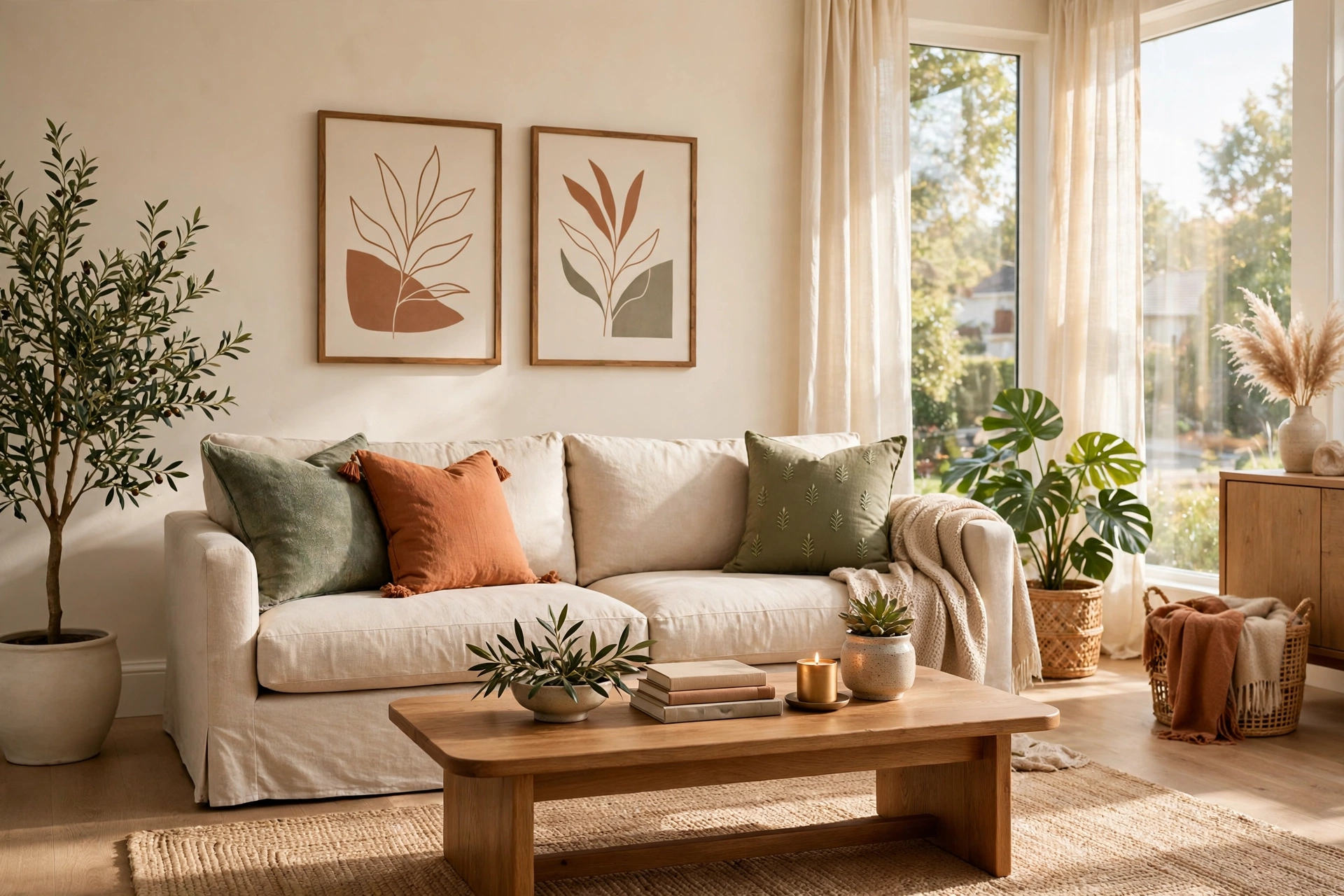
Most rooms rely on a single ceiling light, and most rooms feel flat because of it. Aim for three layers instead: general light from above, task light where you read, cook or work, and soft accent light from table lamps, candles or a picture light. Lamps at sitting height are the real secret — they pool light where people actually gather and make evening rooms feel instantly warmer.
Keep bulb color consistent throughout the house, warm white everywhere, so no room feels cold beside another. Dimmer switches, where you can fit them, let one room shift from bright morning practicality to a low evening glow without changing a thing.
Mix Natural Textures
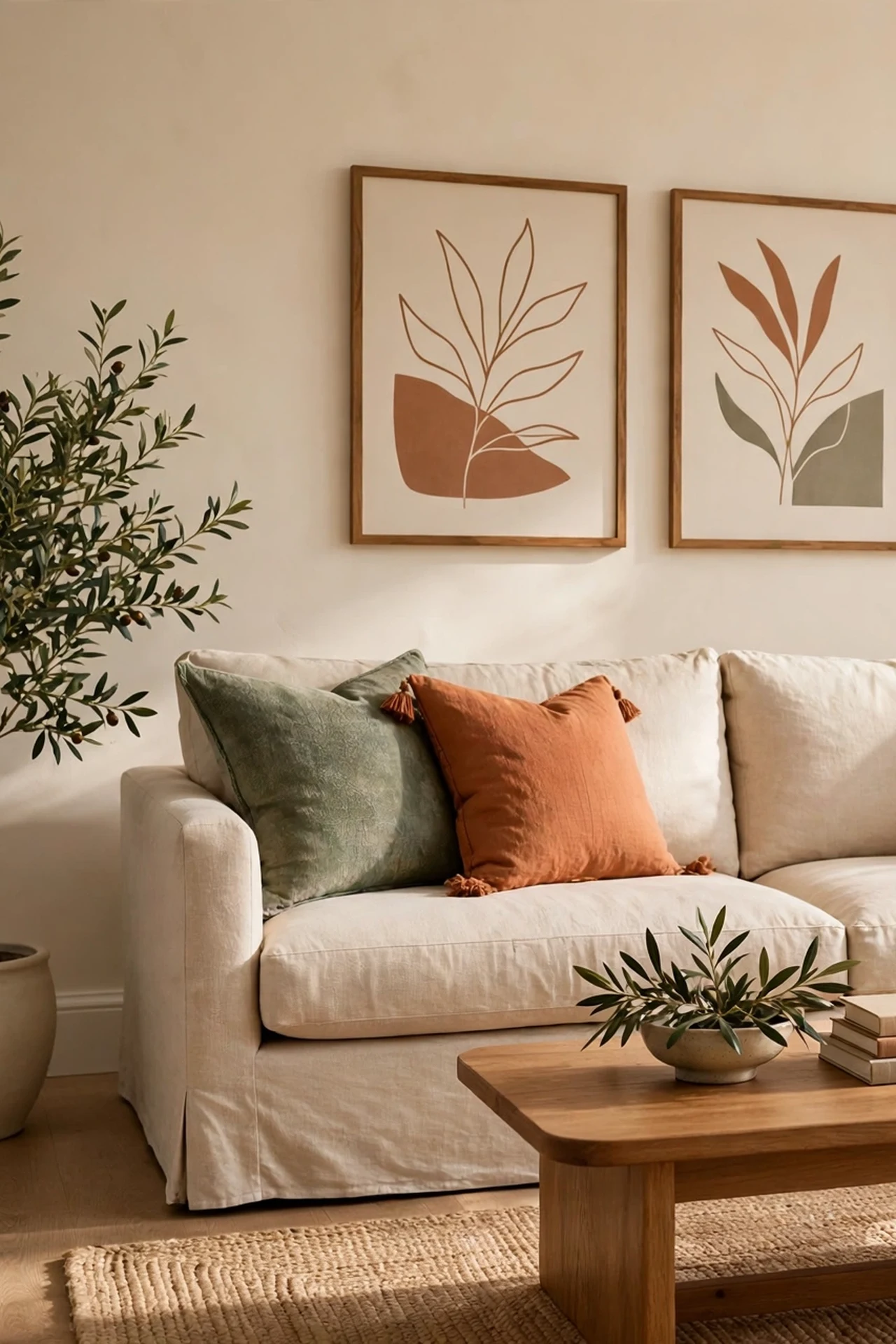
Color gets the attention, but texture is what makes a room feel rich. A space with only smooth surfaces reads as cold, no matter how pretty the paint is. Layer in the natural materials: linen and cotton cushions, a wool or jute rug underfoot, wood with visible grain, woven baskets, ceramic and stone. Two or three textures per room is plenty — more and the eye gets tired.
Texture is also the cheapest refresh there is. Swapping shiny cushion covers for washed linen, or adding one woven throw over a sofa arm, changes the feel of a room for very little money and no decorating at all.
Give Every Room a Focal Point
Walk into any room and your eye should land somewhere: a mirror over a console, a piece of art you love, a styled bookshelf, a fireplace dressed with candles. Without that anchor, even well-furnished rooms feel unsettled. Your entryway is the clearest example — one strong mirror-and-console moment does more than five small decorations scattered around it.
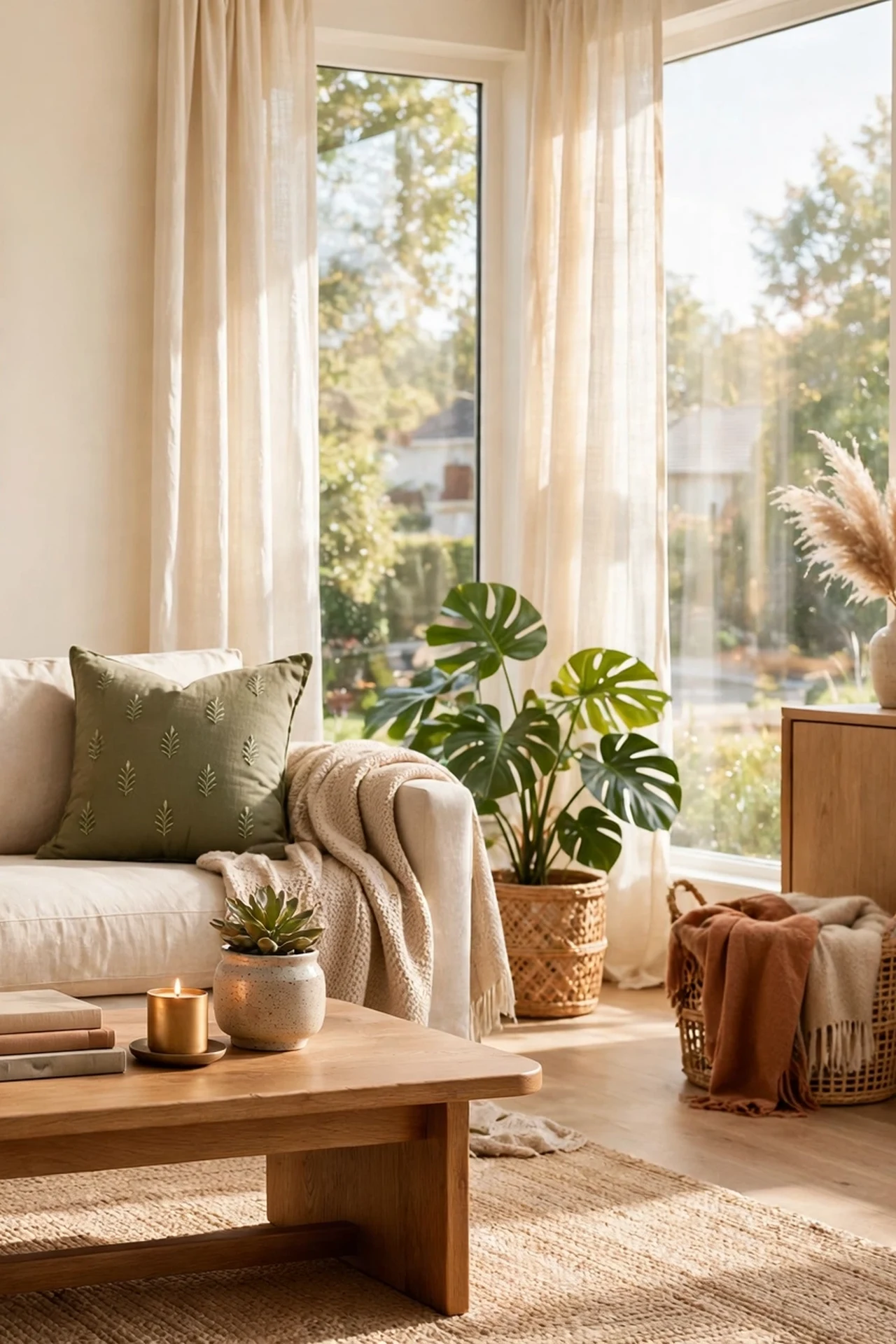
Once the focal point is set, arrange the rest of the room to support it rather than compete with it. Keep competing pieces quieter, and let one thing be the star.
Finish with Personal Touches
The last layer is the one no shop can sell you: framed photographs, books you have actually read, a bowl from a trip, plants you have kept alive. These are the pieces that turn a decorated room into a home. Style them in small groups of three, leave breathing space around them, and edit ruthlessly — a few loved objects on display always beat a shelf of things kept out of habit.
Work through these ideas room by room, starting wherever you spend the most time. A connected palette, layered light, natural texture, one focal point and honest personal touches will carry the whole house.
5 Comments